
By Comrade Abass Fuseini Sbaabe
(Aspiring Eastern Regional Secretary)
The Ayawaso East by-election is shaping up to be one of the most complex and emotionally charged political contests in recent Ghanaian history. Beyond party competition, the election presents a rare intersection of grief, religion, money, and democratic responsibility—raising difficult but necessary questions about representation, timing, and political control.
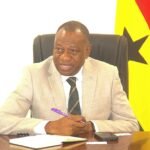
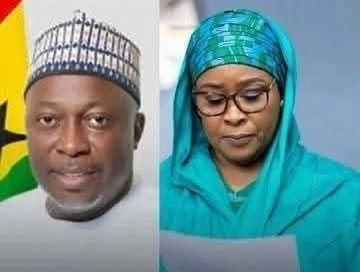
Following the passing of the sitting Member of Parliament, Hon. Naser Mahama Toure, it has become evident that his widow, Hajia Amina Adam, intends to contest the by-election to replace him. On the opposing side, H.E. Baba Jamal has taken the bold step of resigning his position as Ghana’s High Commissioner to Nigeria in order to return home and participate directly in the race.
Both decisions involve sacrifice. Yet they expose very different realities about how political power is sought, exercised, and supervised in Ghana’s electoral environment.
Risk, Sacrifice, and Political Presence
Baba Jamal’s resignation from a prestigious diplomatic appointment is a major professional gamble. However, it is one that places him physically on the ground. He will be fully available for meetings, campaign activities, negotiations, crisis management, and direct voter engagement. If elected, he can immediately assume parliamentary duties without restriction.
For Hajia Amina Adam, the challenge is far more layered. Her candidacy coincides with her observance of ʿIddah, the Islamic waiting period for widows, which restricts public movement and engagement for four months and ten days, as stated in Qur’an 2:234.
The Sunnah further emphasizes remaining largely within the home environment and limiting public exposure except in cases of necessity. This religious obligation therefore creates not only a visibility problem, but more critically, a control problem.
The Reality of Campaigning in Ghana
Anyone who has been involved in parliamentary elections in Ghana understands a hard truth: even when a candidate is fully present and actively involved, the campaign environment is financially predatory.
Every stage of the process demands “facilitation”:
meetings of party executives
engagements with delegates
mobilization of polling agents
logistics for grassroots activities.
A popular Ghanaian saying captures this reality succinctly:
“Instead of slapping your cheeks, they will punch your stomach.”
It reflects the harsh truth of political opportunism, where vulnerability is exploited rather than protected.
Money given out for campaign activities is frequently squandered, diverted, or misused, sometimes right under the candidate’s own eyes. Within Ghana’s political culture, it is often said, half-jokingly, half-truthfully, that there is no accountability in political spending. Once money is handed over for campaign work, the recipient feels little obligation to account for it. Indeed, any serious attempt to demand accountability often turns campaigners against the candidate.
If this is the reality when a candidate is physically present, the risks multiply exponentially when a campaign is run entirely by proxies.
The Financial Dilemma of Campaign by Proxy
Hajia Amina Adam, while observing her Iddah, will have little choice but to resource her campaign through intermediaries—party operatives, trusted associates, and political activists. Yet these intermediaries operate within a system where:
accountability is weak
loyalty is transactional
sympathy is often monetized.
It is no secret that money and materials meant to influence voters often do not reach them, even under direct supervision. How much more vulnerable, then, is a campaign conducted at a distance?
The uncomfortable but unavoidable question must therefore be asked:
How accountable are those urging Hajia Amina Adam to contest, when they will be the very people controlling and disbursing her campaign resources?
In such an arrangement, the candidate risks becoming a spectator, observing her own campaign through phone screens, filtered reports, and political pigeonholes, rather than through direct engagement and firm supervision.
Experience Versus Distance
By contrast, Baba Jamal is a seasoned electoral actor. He has contested more elections than even the late Hon. Naser Mahama Toure. He understands:
– how campaign funds leak
where political deception hides
– when delegates are sincere and when they are merely strategic.
His physical presence allows him to read the room, rein in excesses, confront opportunism, and adjust tactics in real time.
In Ghana’s political context, electoral experience is not an academic credential, it is a survival skill.
An Uncomfortable but Necessary Conversation
This is not an argument against faith, grief, or political participation. It is a call for honesty about capacity, timing, and accountability in a political system where money, presence, and control matter deeply. These questions are uncomfortable.
But democracy does not mature through silence.
It matures by asking the questions others are afraid to ask.