
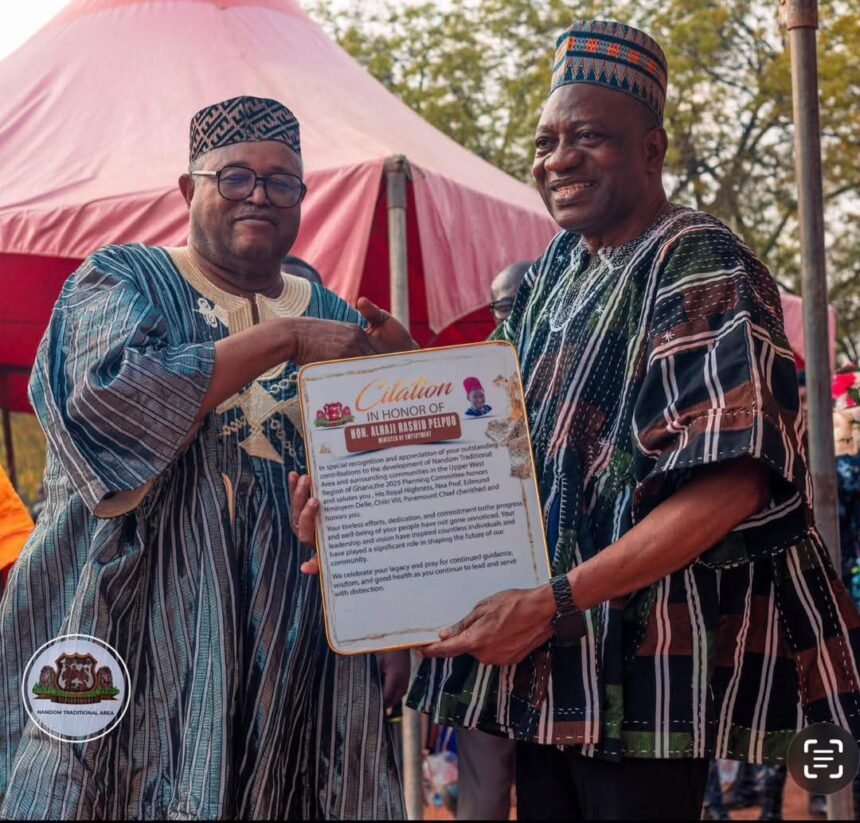
Hon. Dr. Abdul-Rashid Hassan Pelpuo, Minister for Labour, Jobs and Employment, has cautioned young people that “substance abuse is not a sign of strength; it is a path to destruction.” Speaking at the Kakube Festival in Nandom on behalf of President John Dramani Mahama, he drew attention to the rising misuse of tramadol, marijuana and other harmful substances among the youth and called for urgent community action to address the problem.
Dr. Pelpuo noted that drug abuse damages mental health, breaks families, fuels violence and undermines community progress. He reminded the youth that their future is too important to risk on habits that weaken their potential. While government is intensifying sensitization, enforcement and health support services, he stressed that the challenge cannot be resolved by government alone.
He called for stronger involvement from parents, teachers, traditional leaders, youth groups and religious institutions in guiding and protecting young people. “Collective action is the only way to guide the youth toward positive choices and prevent communities from losing more promising lives,” he said.
The Minister also highlighted key government initiatives aimed at expanding opportunities for citizens and improving livelihoods. He pointed to YouStart, GhanaCARES (Obaatanpa), the proposed 24-Hour Economy and the Big Push infrastructure agenda as examples of programmes that create openings for farmers, traders, artisans and young entrepreneurs. These policies, he explained, are practical avenues communities like Nandom can use to improve their economic prospects.
Dr. Pelpuo commended the Nandom Naa and the Traditional Council for sustaining unity and order in the area. He said the Kakube Festival offers a valuable platform to strengthen social values and address issues affecting the community. He expressed confidence that with committed leadership and community support, Nandom can overcome the threat of substance abuse and set a positive example for other districts.
The festival ground featured displays of Dagara culture through music, dance, traditional attire and craftsmanship, reflecting the community’s enduring heritage as this year’s celebration drew to a close.
Source: Public Affairs Unit, MLJE