

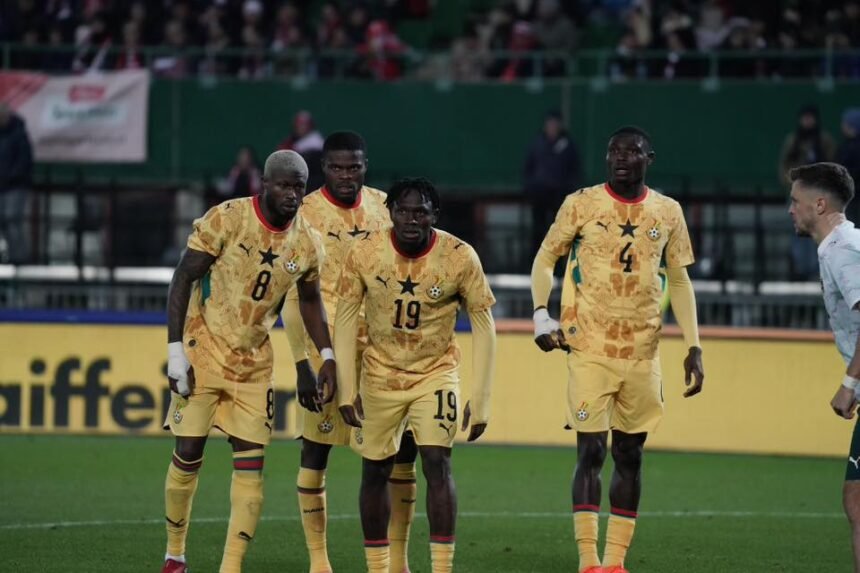
A relentless high press, chaotic transitions, and an exposed Ghanaian backline conspired to produce one of the evening’s most comprehensive friendly results.
Austria produced a performance of striking cohesion and calculated aggression to defeat Ghana 5–1 in an international friendly, a result that flattered neither the scorers for its brutality nor Austria’s game plan for its sophistication. From the first whistle, this was an evening belonging to the Europeans — organised, relentless, and utterly in command.
Pressing with Intent
Austria’s tactical blueprint was clear from the outset. Operating in a 4-2-3-1 formation, they pressed high with coordinated purpose, forcing Ghana into rushed decisions in their own defensive third. The front line used off-pressing lines with disciplined cycle-rotation, and whenever a turnover arrived — as it did with worrying frequency for Ghana — Austria’s transitions were immediate and lethal. This was not chaos. It was choreography.
In midfield, a well-drilled double pivot provided both the engine and the shield. The pair dictated tempo while simultaneously absorbing the defensive risk, arresting Ghana’s attempts to progress centrally. Denied vertical routes, Ghana were consistently funnelled out wide — precisely where Austria wanted them, vulnerable and predictable.
“Each time Ghana lost possession, Austria responded with speed and precision, attacking an unbalanced defence before it could reorganise.”
Wide Overloads and Cutting Scales
The wide channels were where the match was truly won. Austria’s full-backs advanced with conviction, combining with inverted wingers who tricked inside to create overloads and drag Ghana’s defensive line out of shape. Several of Austria’s goals came directly from these combinations — cutbacks threaded into late runners arriving at pace. It was a pattern Ghana could hardly live with.
A Difficult Night for the Black Stars
Ghana, lining up in 4-3-3, attempted to play out from the back — an admirable principle but quickly became a liability under Austria’s press. Technical errors, hesitant decision-making, and jostling gaps between the defensive line and midfield left the Black Stars exposed at every turn. The spaces Austria found in these pockets were not coincidental; they were engineered, and Ghana suffered little tactical adjustment to alter them.
Defensive disorganisation worsened as the match progressed. Full-backs were caught out of position; centre-backs struggled to cope. Austria’s movement and timing of runs, the Ghana press forward in search of a foothold, their backline stretched further, and Austria punished each moment of imbalance with pace and precision on the counter.
Verdict
A solitary goal gave Ghana supporters brief respite, but it barely dented Austria’s composure. The hosts — or rather, the tactically superior side — managed the game’s closing stages with calm authority, maintaining shape and continuing to exploit the structural flaws that had defined the entire ninety minutes.
For Austria, this was a statement of collective cohesion: modern pressing football executed with the kind of discipline that makes it genuinely difficult to play against. For Ghana, the evening has been urgent areas of concern — specifically in handling organised pressure, maintaining defensive composure, and managing the speed of transitions. The scoreline was heavy. The lessons, perhaps, are heavier still.